


Healthcare innovation in India is entering a more mature phase. The opportunity is no longer only about digitizing care; it is about improving access, affordability, trust, and measurable outcomes at scale.
For healthcare startups in India, this creates a powerful opening. Founders can build solutions that make care easier to reach, simpler to understand, more affordable to deliver, and more reliable for patients, doctors, hospitals, insurers, and providers.
At BXI Ventures, we see healthcare as one of India’s most important long-term investment themes. The strongest healthcare businesses will combine technology with operational depth, clinical credibility, and a clear understanding of patient and provider needs.
Why Healthcare Is a Scalable Opportunity
Healthcare is a sector where innovation must solve real-world problems. Convenience alone is not enough. Customers and stakeholders look for trust, quality, compliance, and outcomes.
This makes healthcare different from many other startup categories. A strong healthcare business must serve multiple stakeholders at once: patients, doctors, hospitals, labs, pharmacies, payers, employers, and regulators.
The startups that stand out will be those that can simplify this complexity while creating measurable value.
1. From access gaps to care availability
India’s healthcare opportunity is deeply linked to access. Many patients still face challenges around availability, affordability, travel time, specialist access, diagnostics, and continuity of care.
Startups can create value by bringing healthcare closer to the patient through digital care, assisted care models, diagnostics networks, remote monitoring, and more efficient delivery channels.
2. From digital tools to trusted care models
Technology can improve healthcare delivery, but trust remains central. Patients and providers need confidence in the accuracy, reliability, and safety of a solution.
Healthcare startups must therefore build around clinical credibility, data privacy, compliance, strong provider networks, and clear patient communication. In this sector, trust is not a brand layer; it is the foundation of the business.
3. From treatment to prevention and outcomes
The next wave of healthcare innovation will not only focus on treating illness. It will also focus on prevention, early detection, chronic care, wellness, and measurable health outcomes.
This shift creates opportunities for startups working across diagnostics, health monitoring, care management, insurance-linked models, employee health, and condition-specific platforms.
4. From fragmented journeys to integrated care
Patients often experience healthcare as a fragmented journey: consultation, tests, treatment, medicine, follow-up, and payment may all happen across different systems.
Startups that can connect these touchpoints can improve patient experience, provider efficiency, and continuity of care. Integration is a major opportunity in healthcare, especially when it reduces friction without compromising quality.
Healthcare Opportunity Snapshot
The next generation of healthcare startups will create value by improving how patients access, experience, and trust care across the healthcare journey.
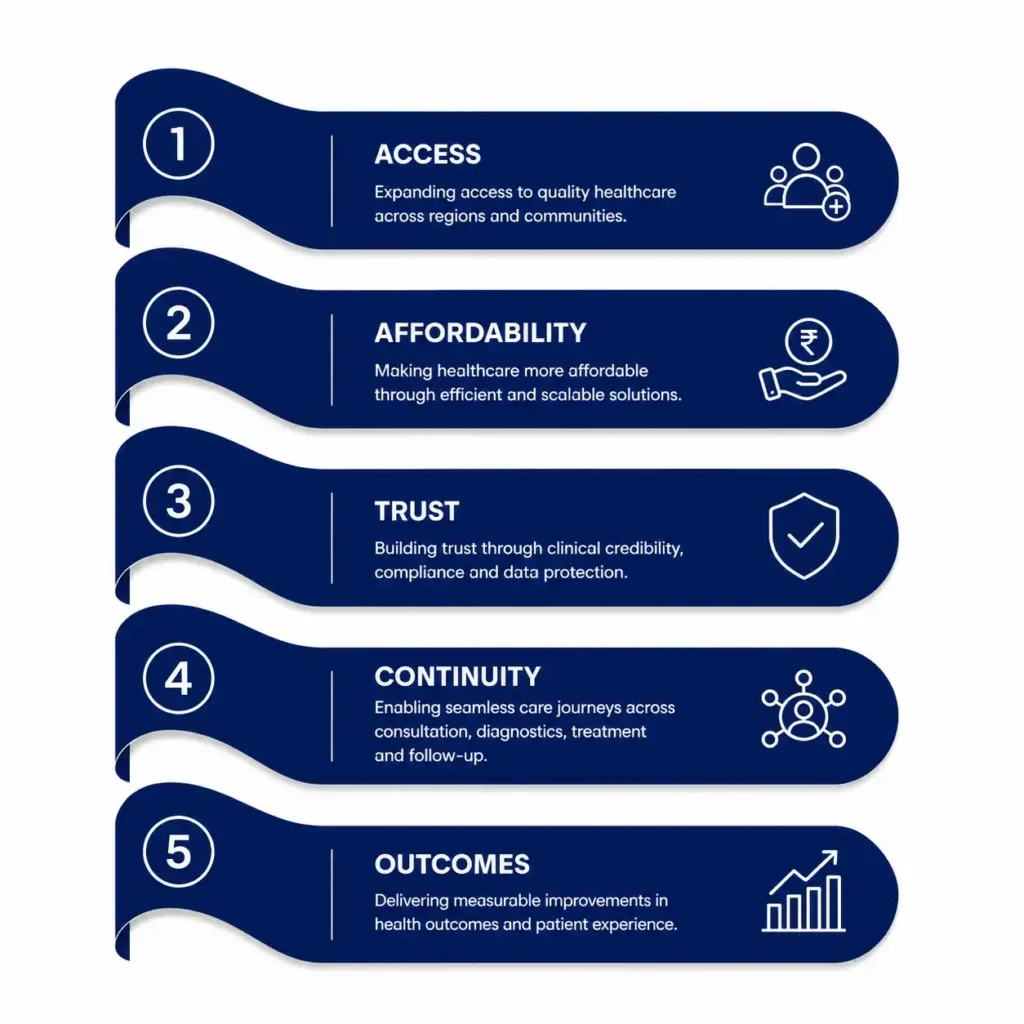
Outcome: Scalable, Access-Led Healthcare Healthcare startups that combine access, trust, affordability, and measurable outcomes can build durable businesses while improving real patient and provider experiences.
What This Means for Founders
Healthcare founders need to build with patience and discipline. Unlike many sectors, adoption in healthcare depends on credibility, stakeholder alignment, and operational reliability.
Investors will look for more than product adoption. They will want to understand whether the model improves outcomes, reduces friction, earns trust, and can scale without weakening quality or compliance.
What Healthcare Founders Should Pressure-Test
| Evaluation Area | What Investors Want to See | Founder Reflection |
|---|---|---|
| Problem | A clearly defined healthcare pain point linked to access, affordability, quality, or outcomes. | Is the problem urgent and frequent enough to support scale? |
| Trust | Clinical credibility, strong provider alignment, compliance awareness, and responsible data handling. | Why should patients and providers trust the solution? |
| Business Model | A commercially sound model with clear buyer, payer, user, and adoption pathways. | Who pays, who uses, and who influences adoption? |
| Outcomes | Measurable improvement in patient experience, cost, diagnosis speed, care quality, or continuity. | Can the healthcare impact be measured clearly? |
| Scale | A repeatable delivery model that can expand without compromising quality, compliance, or trust. | Can the model scale responsibly across markets? |
The BXI Ventures Perspective
Healthcare is one of the few sectors where business value and social impact can move together. When a healthcare startup improves access, affordability, efficiency, or outcomes, it can create value for both the market and the wider ecosystem.
At BXI Ventures, we are interested in founders building healthcare businesses with strong fundamentals, trusted delivery models, and long-term relevance. This includes opportunities across healthtech, diagnostics, medtech, care delivery, preventive health, and healthcare infrastructure.
The next generation of healthcare companies will not be built on technology alone. They will be built on trust, execution, clinical understanding, and the ability to serve real patient needs at scale.
BXI Ventures partners with founders building scalable healthcare businesses that improve access, trust, and outcomes for India’s future.